


Many women played a role, if not often a supporting one, in the Revolutionary War. Most of their stories are lost to the ages, but some endure. Sometimes, with women such as Abigail Hempstead (1728-1805), you can tease out the story of her life by analyzing the stories of the lives of the many historically well-documented men she shared her life with.
A direct descendant of John Youngs, Abigail Hempstead was born in Southold. She was the daughter of Robert Hempstead and Mary (Youngs) Hempstead. The story of her adult life starts with a forbidden romance. Abigail eloped with Captain John Ledyard in 1750 because her parents refused to give her to him in marriage. The marriage not only contradicted the wishes of Abigail’s parents, but it was also contrary to the law. The couple had asked a family friend, Doctor Mawason, who had marriage license blanks from the government, to fill one out for them, so they obtained a fraudulent license.
It is possible that Abigail’s parents had reasons for their disapproval, beyond simply the couple’s familial ties. Perhaps there was something about Captain John himself, about his character or personality. He may have been a drunkard or simply impious. Or perhaps they were suspicious of his whole clan. Relative to Abigail’s maternal lineage, they were newcomers to the colonies. Their patriarch, Squire John, had arrived from England in 1717, while the patriarch of Abigail’s mother’s family, the Reverend John Youngs, had established one of the first English towns on Long Island in 1640. Similarly, the Youngs were a family of landowners and farmers. John’s family were merchants, sea captains and Lawyers. In any case, the young couple was defiant. In Groton, Connecticut, far from Abigail’s Long Island family, they would be welcomed. They rented a house, and the family’s livelihood would come not from the family’s property, but from the sea.
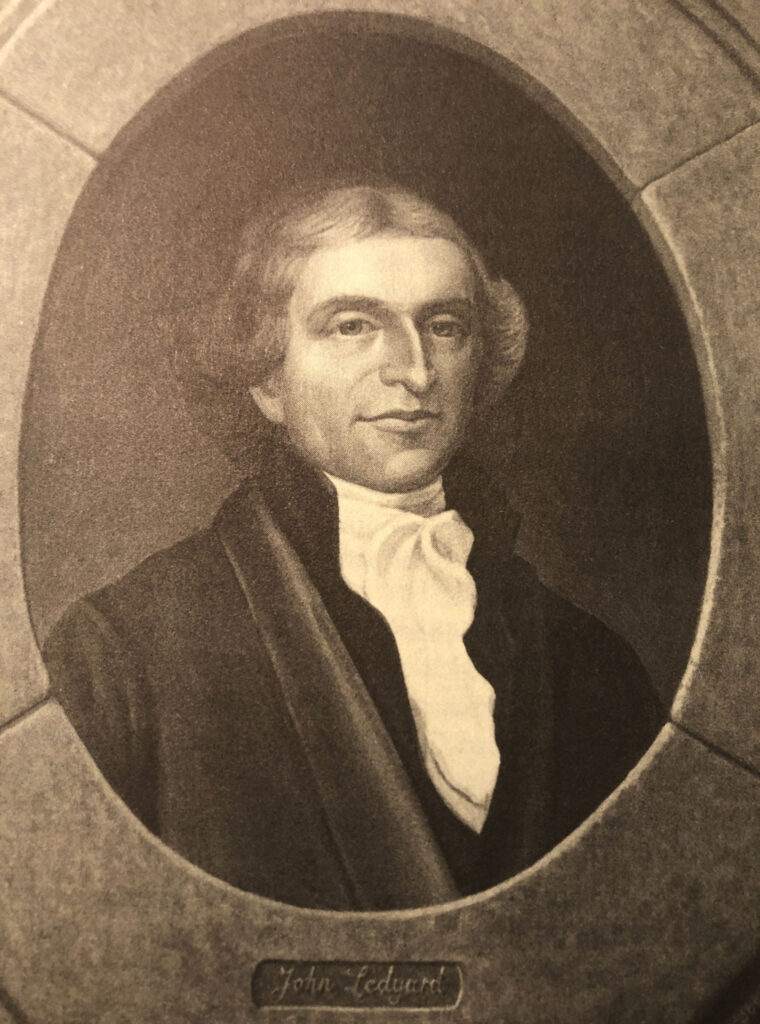
While in Connecticut, Abigail had four children, including John Ledyard, the third, who was also world-renowned for his nickname “The Traveler.” In June 1776, Ledyard joined Captain James Cook’s third and final voyage as a British marine. He continued to work in the fur trade and travel around the world, including African expeditions. He wrote the Journal of Captain Cook’s Last Voyage published in 1783. Today, this work is annotated in rare-book bibliographies as the first travelogue describing Hawaii ever to be published in America
In 1762, Abigail’s husband, Captain John, died, not of a storm at sea, but of smallpox, as he sailed toward the Caribbean. Upon her husband’s death, Abigail placed his estate before a court of probate. This committee of prominent local men would determine who received what of the sea captain’s modest assets. Fortunately for Abigail and her children, Connecticut law was relatively benevolent when it came to probate proceedings. The general practice in the colony was to grant widows one-third of the estate with the real estate normally held in trust for the deceased’s male heirs. Since Captain John owned no real estate, Abigail mainly acquired household goods and furniture, linens, tools, cooking utensils, dishware, clothing, and livestock. Her portion of the estate was roughly forty-five pounds sterling, a substantial one, but not enough to sustain the family. To help compensate for her loss, Agigail returned with her children to her hometown of Southold, where she lived on her father’s farm, who had apparently forgiven her. There she would be the daughter of one of the first families of English Long Island, rather than a widow of a modest Connecticut sea captain. Soon after, Abigail married the physician and widower Dr. Micah Moore, and the couple began adding to their family, having two more daughters. Dr. Micah Moore died in 1775, leaving Abigail, now 50, with a large family to care for, a year before the American Revolution.
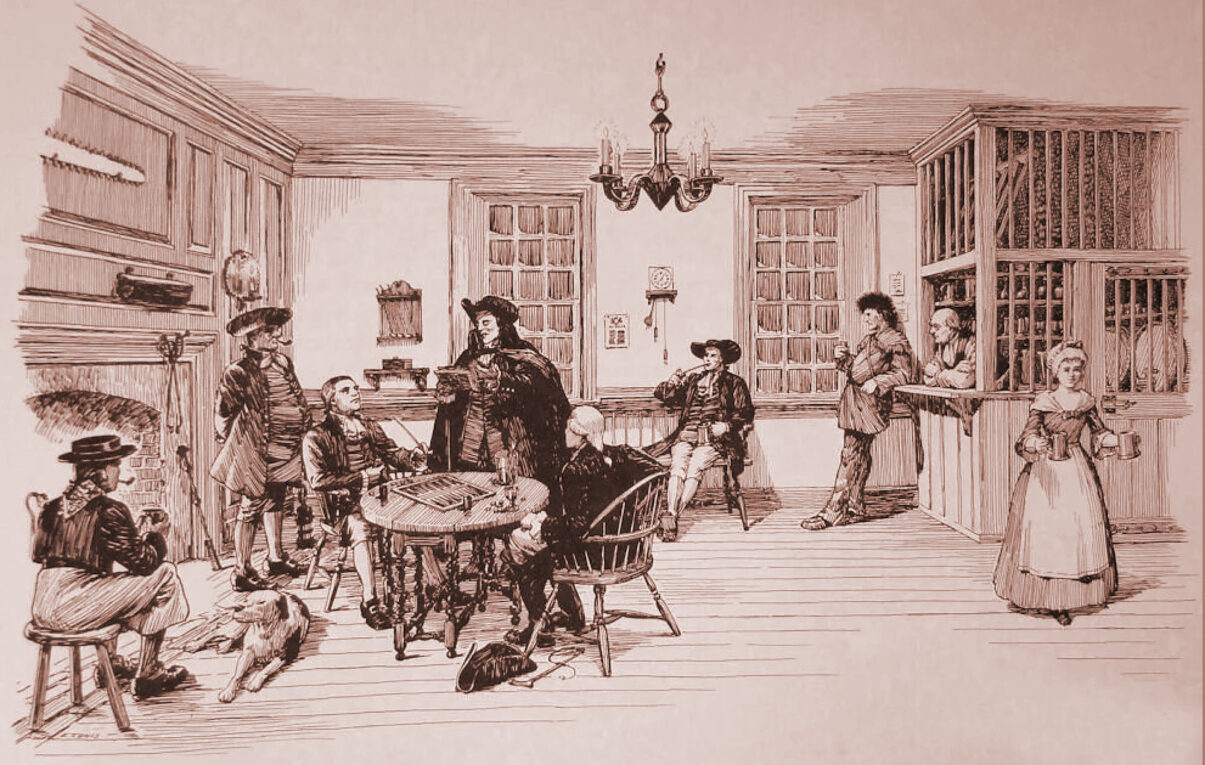
When George Washington lost the battle of Long Island in the summer of 1776, as many as half of the inhabitants of Southold fled to Connecticut. British and Hessian troops quickly occupied and terrorized the area. Abigail had turned her house into a inn/tavern to help support the six children she had remaining at home. Tavern life was the hub of the community during the revolution, and there were many comings and goings by both loyalists and patriots. Abigail had a strong reputation for being a patriot, and despite the fact that her tavern was frequented by British officers, Abigail was rumored to house deserters to the crown.
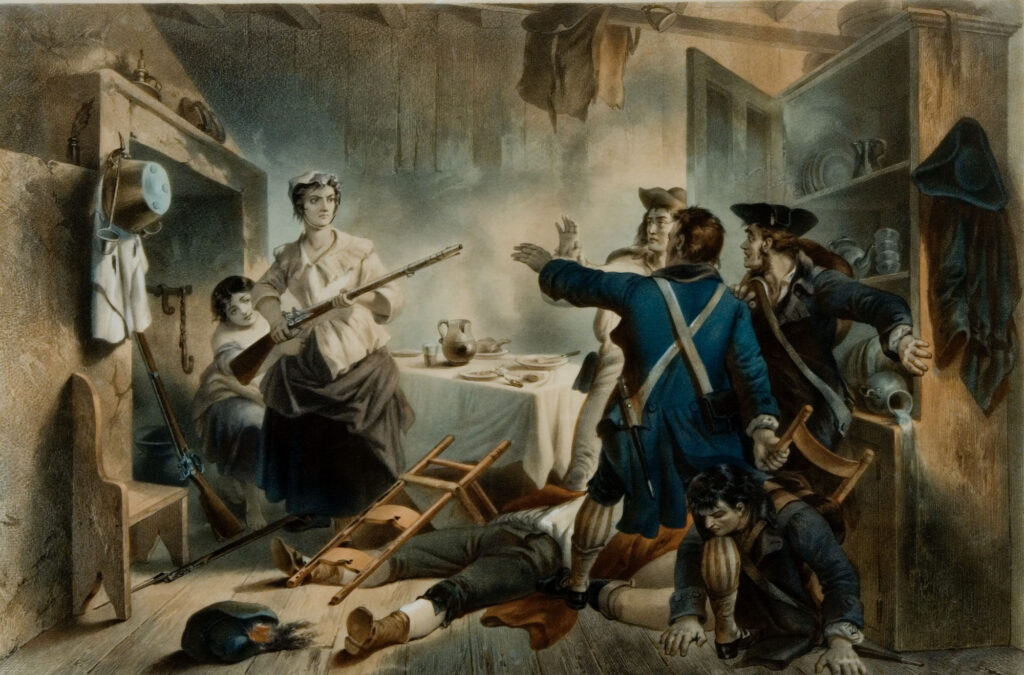
In his journal, Augustus Griffin (Griffin, 1767-1866, documented his life experiences in a journal and diary. Many of his stories, such as this one is considered word-of-mouth history) explains that Elnathan Burts, who was 30 and unmarried, had been cozying up to the British ever since they occupied the town. Thomas Ledyard, another son of Abigail and four cronies, John Boisseau, Nat L’Hommedieu, Stephen Baily and Joshua Horton, charged Berts with being a turncoat. He denied it and ran. When they gave chase, he shot and killed Horton, then fled to the protection of the British.
A few weeks later, an officer with a drawn sword entered her house, quickly followed by several other soldiers. Abigail’s children, frightened, came around her for protection. It is claimed he said, “Madam, I am informed you harbor deserters here. If this is true, by the Eternal God, I will lay your house in ashes before morning.” Abigail said, “Sir, your language bespeaks not the Englishman, who I have been taught is courteous to women. I am a widow, although unprotected, and with my little ones about me, I feel myself perfectly secure under the protection of Providence, which has thus far sustained me. My trust is in God. I have no fears of man. Allow me to request, who is your informer??” He replied, “That man,” pointing to Elnathan Burts. She responded, “Well, he is a liar, and if you so choose, I will prove him that.” The soldiers promptly searched the house and, finding no one hidden there, backed away and went on their way to search somewhere else. The Officer observed to his guard: “The influence of these American women, I perceive, is measureless.” Burts’ accusation was clearly an attempt at retaliation against Abigail’s son Thomas, but her reply and the fact that she had no deserters left Burts’ reputation with the British in poor standing.
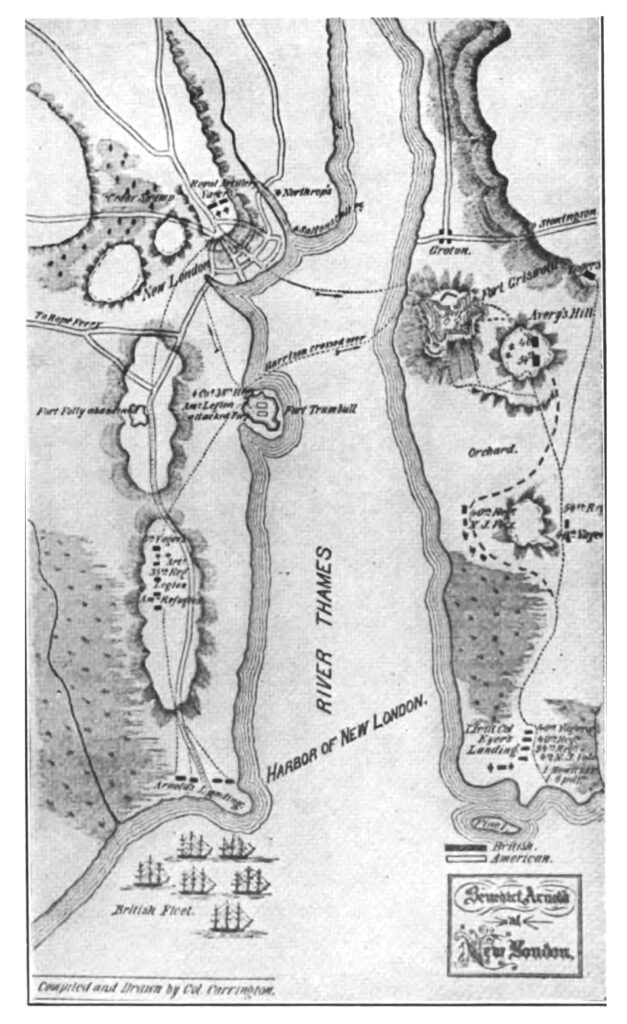
After the British threatened to burn down her home, Abigail evacuated her 27-year-old daughter, Fanny Ledyard, to her Uncle in Groton, Connecticut, where Fanny grew up, and Abigail thought she would be safe. Very soon into Fanny’s exile, a British force of 1,700 men under the command of the traitor Benedict Arnold raided the towns of Groton and New London, Connecticut. When Fanny Ledyard heard about the fighting at Fort Griswold, she went to help. On entering the Fort, her first sight was the body of her dead uncle. Nevertheless, she ministered to the wounded and dying long after the enemy had gone. The next morning, she brought wine, water, and chocolate to cheer the wounded who were still within the Fort. Of the approximately 150 defenders of the Fort, 85 were dead and 60 more were wounded, some mortally. The British losses were significant, given the limited opposition. Approximately 20% of the British force were casualties.. Just one month later, the British Army at Yorktown surrendered, effectively ending the Revolutionary War
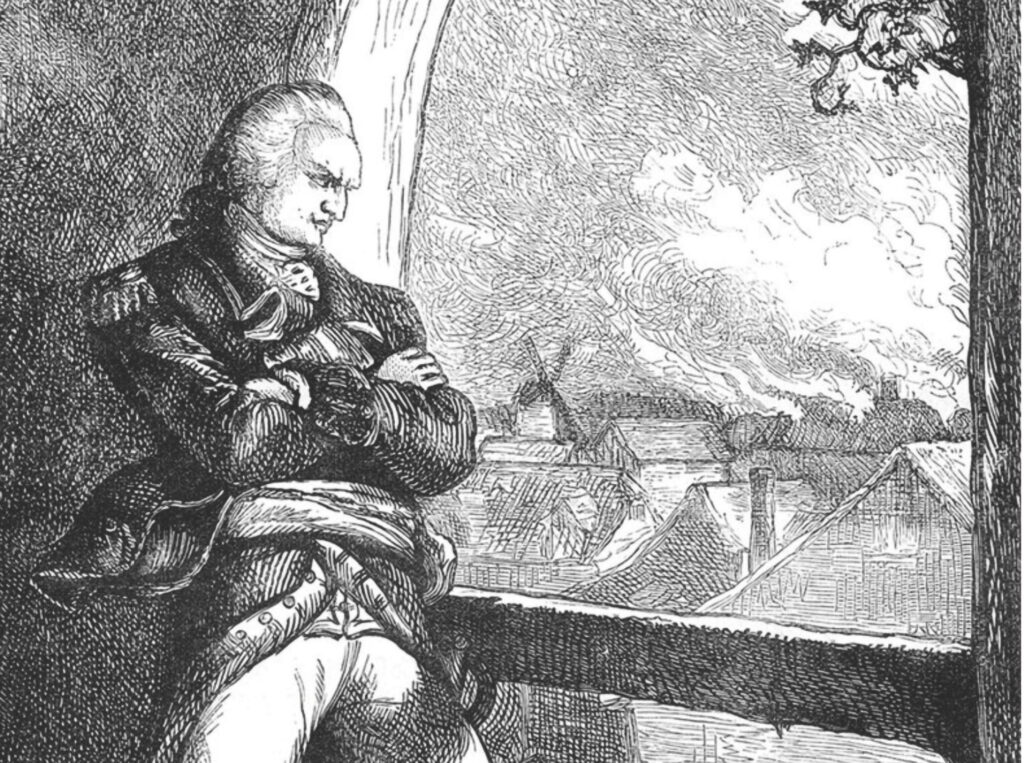
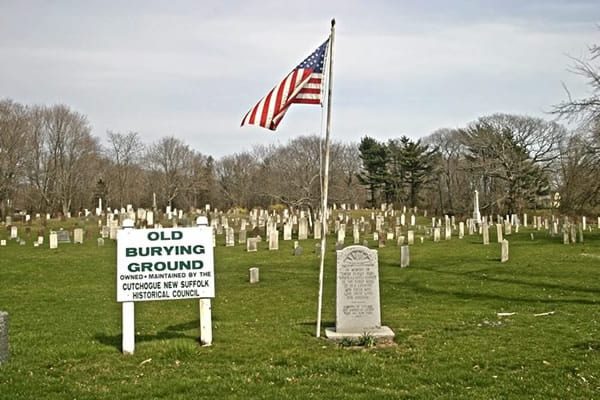
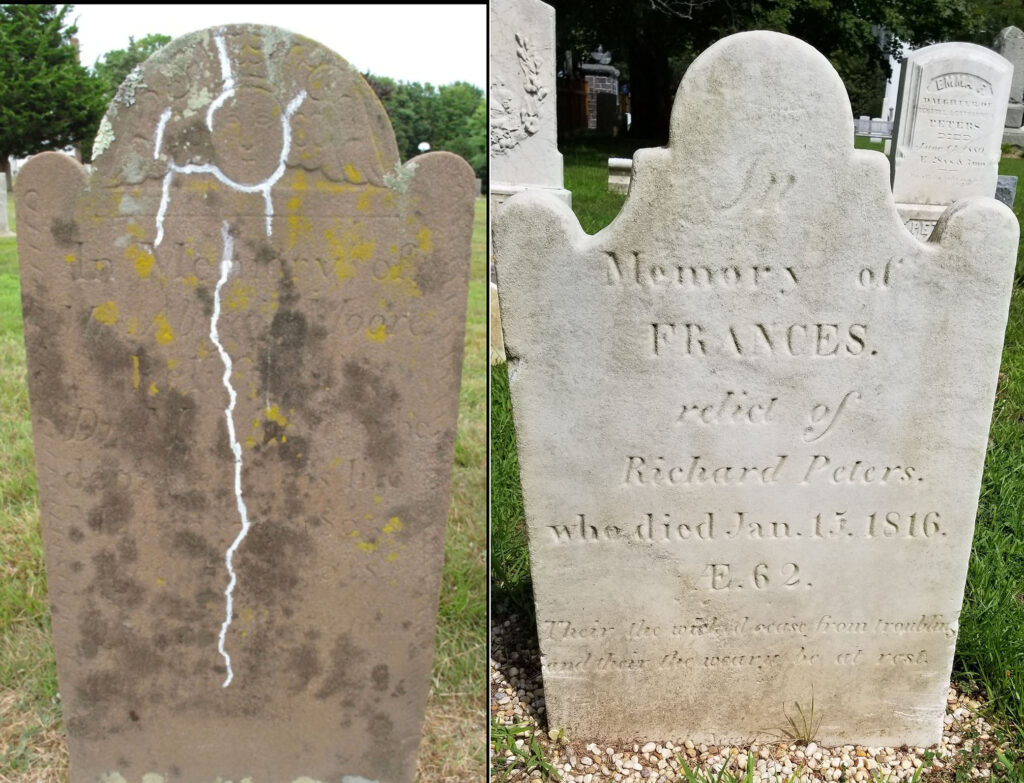
On a DAR tablet in Southold Cemetery is the following: “The Fanny Ledyard Chapter, DAR of Mustic, Connecticut, place this tablet upon the grave of Fanny, niece of Col. Wm. Ledyard, in memory of her noble work among the wounded and dying after the massacre at Fort Griswold , Sept. 6, 1781.
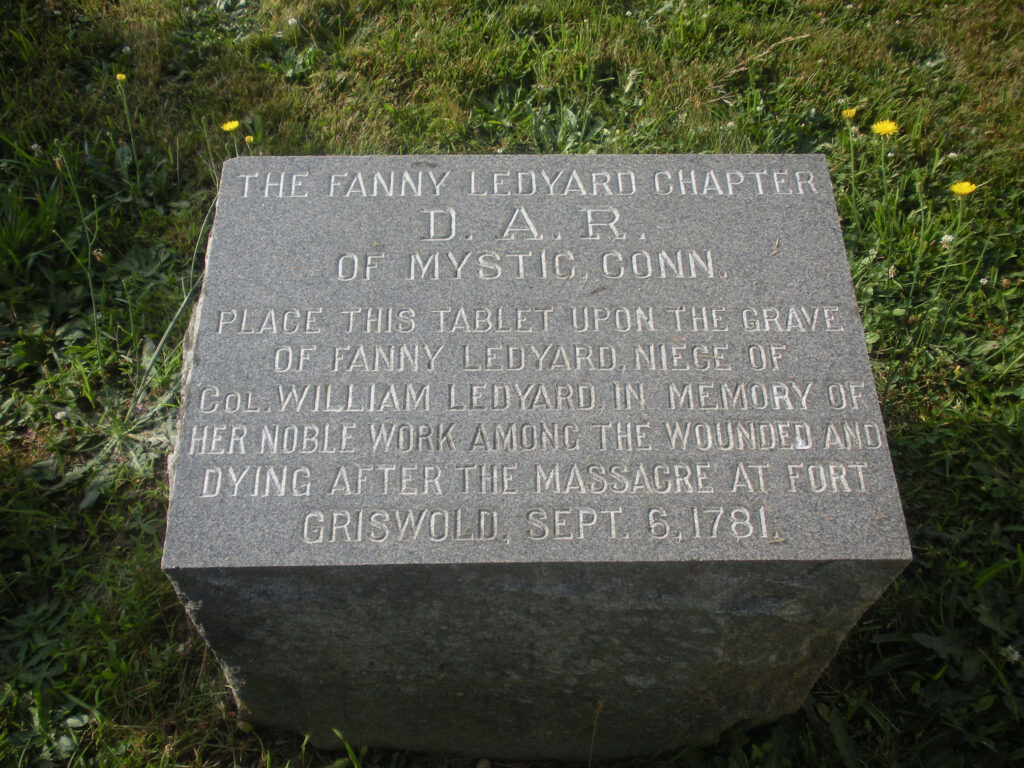
The Making of John Ledyard, Edward G. Gray, 2007
The published journals of Augustus Griffins 1857
Chapter Sketches, Connecticut Daughters of the American Revolution, 1901
The Refugees of 1776 from Long Island to Connecticut, Fredric Gregory Mather 1913