In today’s political climate, you often hear the question, “Why do we need a Black History Month?” The answer is clear to most historians. The stories of Black people and minorities were deemed unimportant, unworthy of being written down or repeated, usually delegated to the footnotes of the stories of colonists and white people. If you question this, you just have to look at The Salmon records, a private register of marriages and deaths of the residents of the town of Southold, William Salmon,1915. As you read through the records of marriages and deaths, you occasionally find a list of the crew of a ship lost at sea, the full name of each member, and occasionally the names of the families they left behind, all carefully noted. At the end of some of these lists, you will find the addendum: “and three negro boys”. To be fair, it’s possible the names were never recorded and unavailable to Salmon. But even if they were, almost 50 years after the Civil War, it was deemed perfectly acceptable for the writer not include their names. These are just a few reasons, among many more, why we need a month to focus on Black History and shine a light on their stories and contributions to our nation.
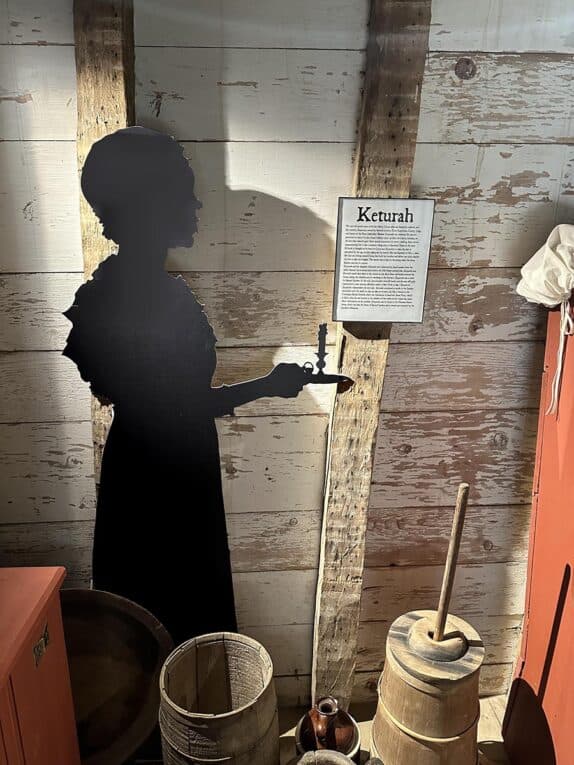
Occasionally, we are fortunate to find or put together a more fully fleshed-out story of an enslaved person on the North Fork. We have written about her before, but new information has come to light that enhances our understanding of her life. And while her life is not linked to any significant events in history, it does help us understand what the life of a black woman, enslaved and then emancipated, was like, and that holds interest in and of itself. Her name is Keturah, and she was enslaved by the Landon family, a family with many members practicing law, who meticulously documented everything, and whose descendants kept these documents, although they are now scattered in historical archives all over Long Island.
We start Keturah’s story with her father, Cyrus, who was formerly enslaved, and her mother, Zipporah, owned by Samuel Landon, Town Supervisor, County Judge, and Justice of the Peace (1699-1782). Because Zipporah was enslaved, she was not legally permitted to marry under Federal and State law. Local folklore plays up the love story of Cyrus and Zipporah, emphasizing that enslavers granted them special permission to marry, making them sound magnanimous, but this was common in Southold Town at the time.
Keturah is thought to have been born to Cyrus and Zipporah in 1789; this date is calculated by her age on later dates, not by record. She was baptized on Oct. 7, 1804. She had one sibling named Cyrus, but both her brother and father met early deaths—the first in 1804 by lockjaw.
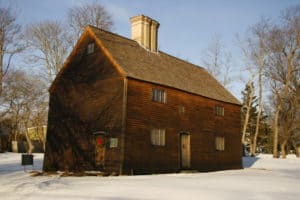
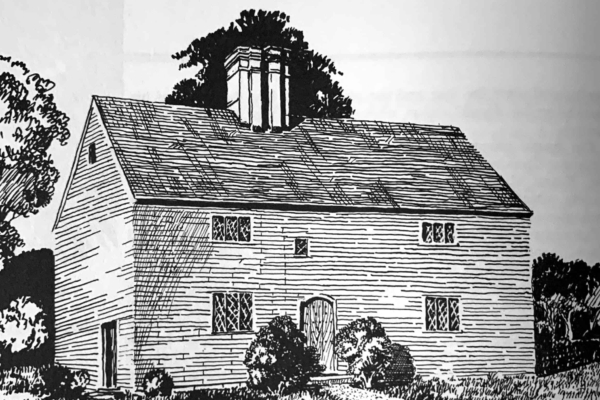
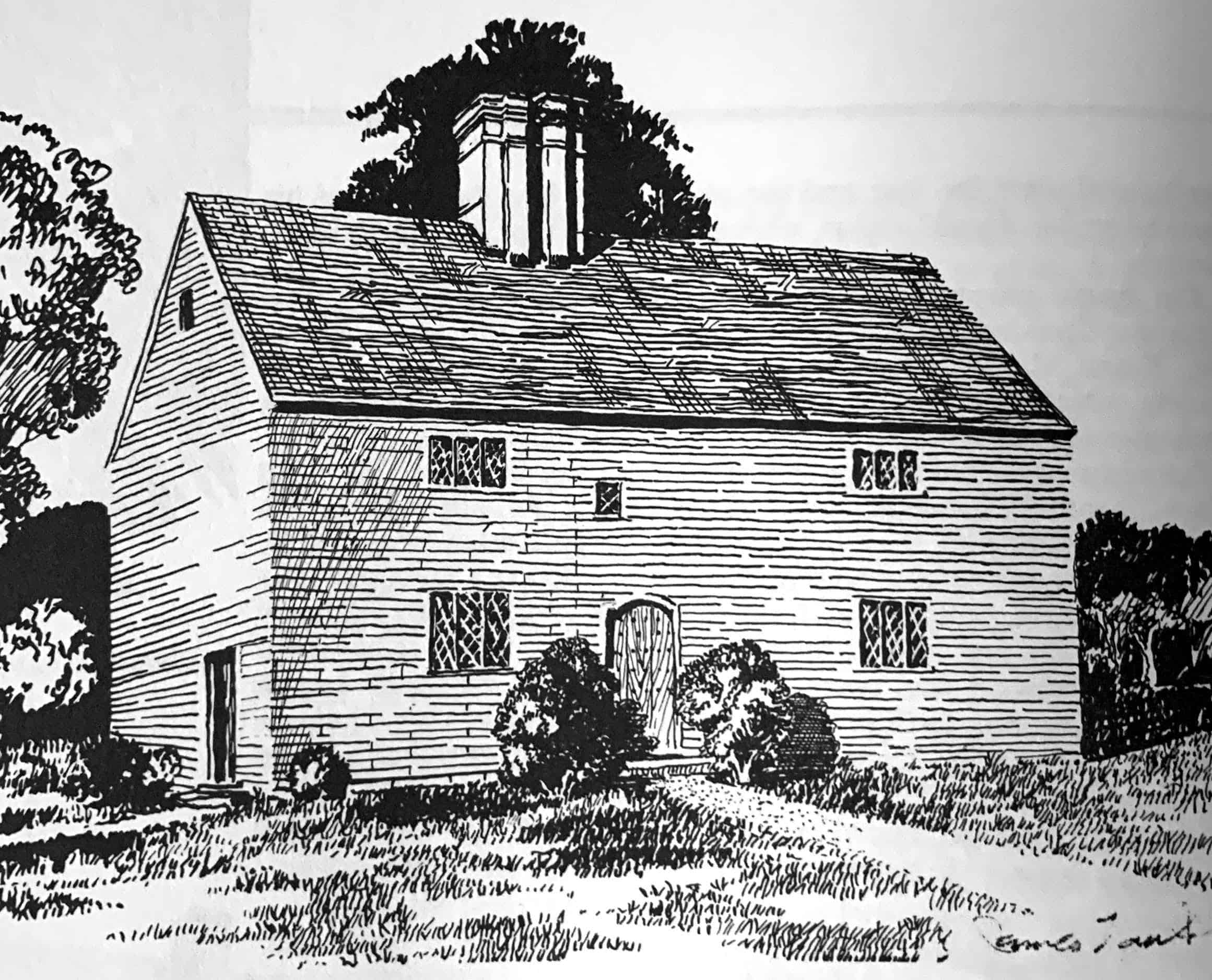
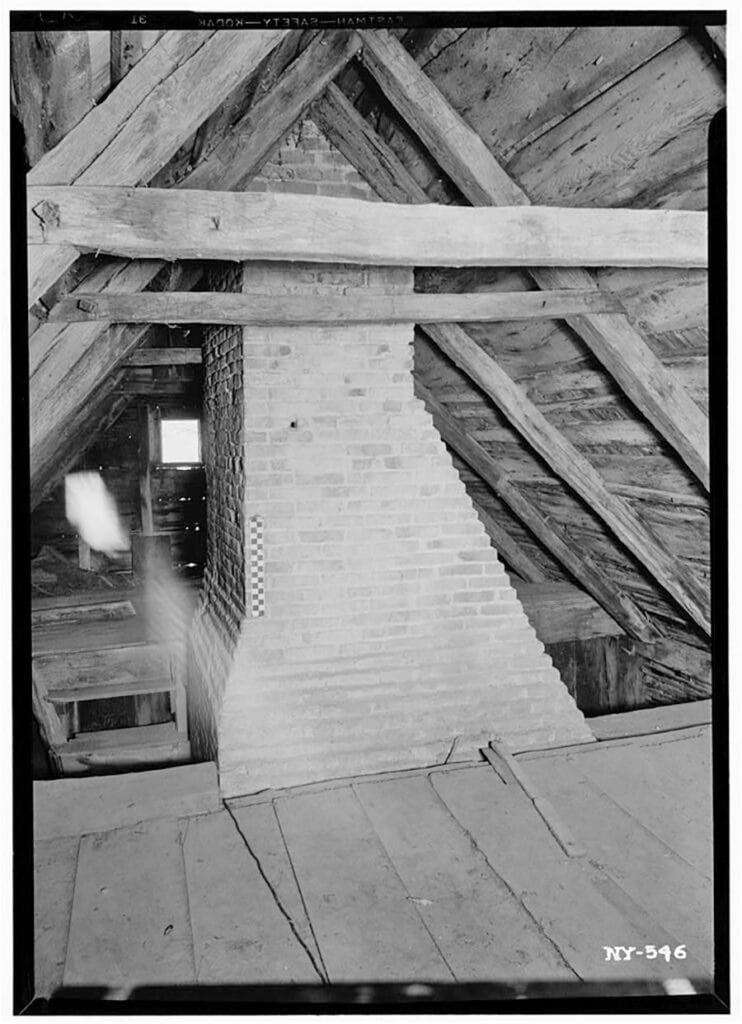
Zipporah and her daughter Keturah were inherited by Jared Landon (1740-1816) from his father Samuel, around 1782. At this point in history, Jared had purchased the Old House in Cutchogue, which was previously lost to loyalist Parker Wickham through an act of Attainder. Keturah and her mother would have slept in the rooms on the third floor, which may have been comfortably warm in the winter, but unbearably hot in the summer. They helped around the house, raised the children, and worked in the kitchen. Zipporah was a cook for Samuel Landon during the Revolutionary War, and there are many references that she cared for him in his advanced years and infirmity, which indicates that Zipporah was with him when he was a refugee in Connecticut during the war. Landon made several petitions to return home, but unfortunately, he passed away at the same time his petition was granted, and it was his mortal remains that were returned to his Long Island home for interment.
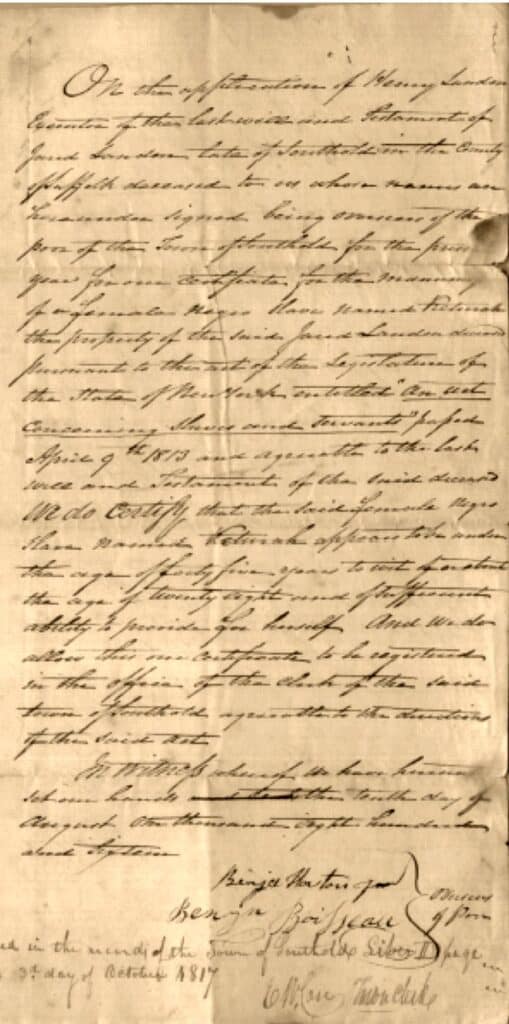
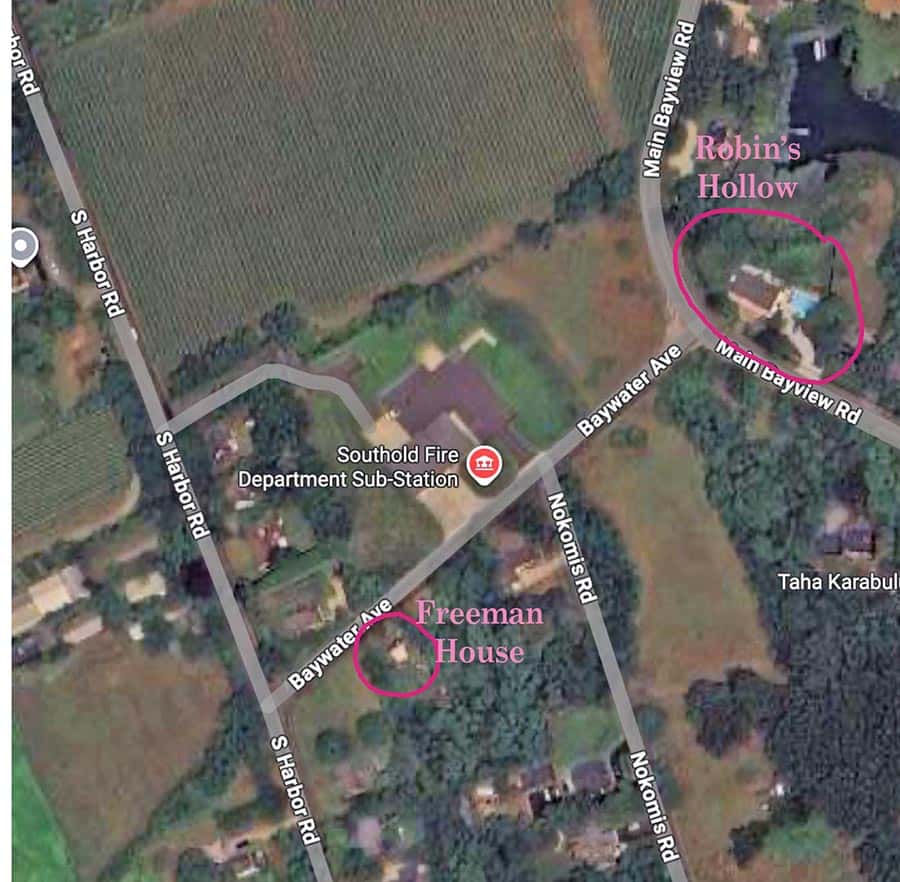
In his will, Jared Landon freed Keturah and Zipporah, and she was officially manumitted in 1817 (slavery officially ended in New York in 1827). Henry Landon, Jared’s brother and executor of his estate, betrayed those instructions, manumitting Keturah while keeping Zipporah enslaved. Henry Landon was a member of the pro-slavery Loco Foco party, a fringe movement in New York’s Democratic party from about 1835-1845, and a county court judge. This act was a manipulation by Henry to ensure that Keturah, though now free, would stay with the family to be with her mother. And it seemed to work. Also in 1827, Mary Landon, Jared’s granddaughter, married Silas Horton and moved to Hog Neck (now known as Bayview) in Southold, to a place they called “Robin’s Hollow.” Mary brought Keturah with her, leaving Zipporah behind, but only a few miles away. Probably to clarify everyone’s position, Henry Landon wrote a deed of gift “in consideration of the good behavior of Zipporah and Keturah, and their kind treatment to my father’s family (while slaves) [I] … do give on to them [a number of household items including beds and blankets] … on condition that the said Zipporah shall not in her lifetime dispose of the articles by gift or sale.” Keturah likely helped raise Mary and her sister in the Old House in Cutchogue, especially after Mary’s mother’s death. Over time, Keturah’s role in the household evolved from playmate to sitter to surrogate mother, juggling household duties all the while. She had become an inseparable part of the family.
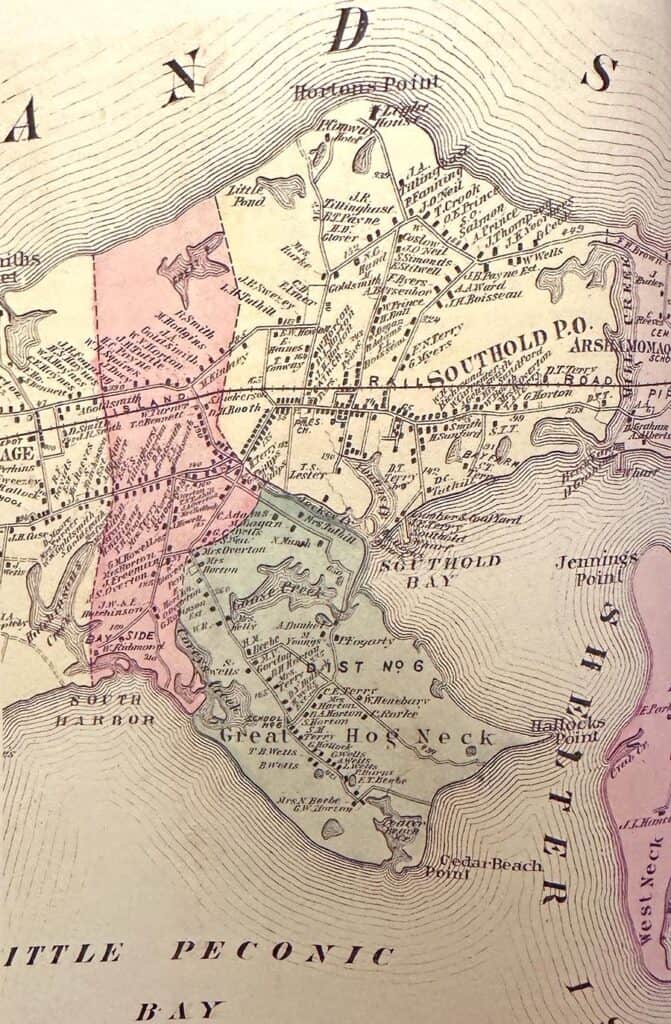
Geographic Rare Antique Maps via Wikamedia Commons
By the Spring of 1837, Mary had five daughters and relied on Keturah to help raise them with a firm hand. As the children grew and went away from home, letters back read “Dearest love to your mother and yourself. Does Turah remember me? If she does, I will send my love to her.” The couple allowed Keturah to take their daughter on trips to visit a nearby black family in Hog Neck. The diary of Angeline Horton, Mary’s 12-year-old daughter, included outings with Keturah, including visits to Keturah’s friends, the Freeman family, and functions like temperance meetings and church. In later years, Keturah cared for Mary’s daughter’s children as well. When the Hortons were away, Keturah reigned over household matters and supervised the servants. In the early 1860s, when age began to diminish Tura’s faculties, Mrs. Horton hired extra help: a 16-year-old girl named Louisa Jefferson, mother of the first Southold Town Historian, Wayland Jefferson. Louisa was from the city and used to being part of a vibrant, supportive black community. To make her feel more comfortable in her surroundings, Keturah introduced Louisa to the Freeman family, whom she had taken Angeline on visits to years earlier to help her settle in.
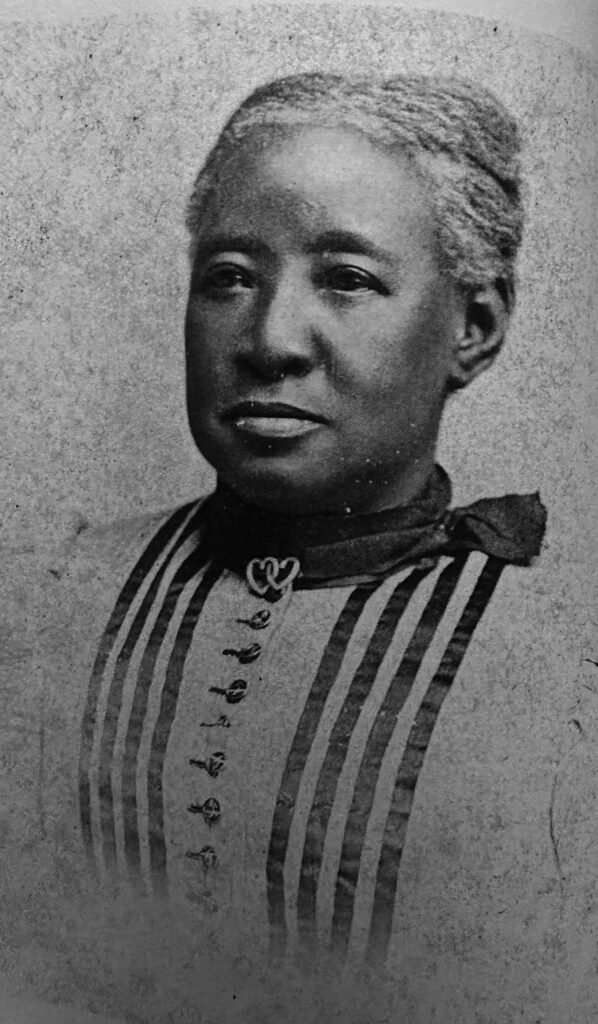
The Unsettling Legacy of Wayland Jefferson, Jacqueline Dinan, 2024
One of Mary’s aunts demonstrated a high regard for Keturah, including her as a beneficiary of her will and asking her to witness the document.
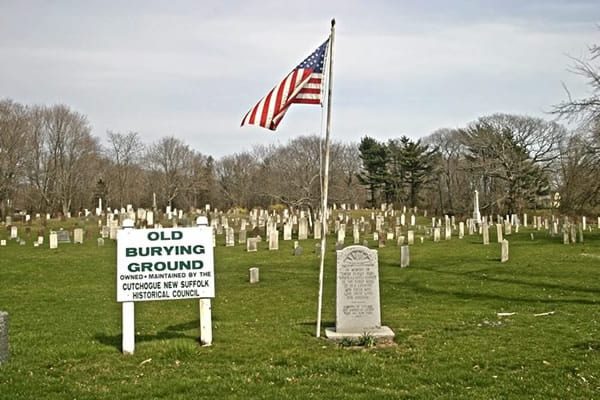
Keturah is buried in the Cutchogue Old Burial Ground, where her tombstone is inscribed “Aunt Tura,” which is what she was known as to the children of her enslavers for whom she cared. The term “aunt” assigned to an enslaved woman historically often signified a role that included responsibility for raising, caring for, and protecting children, both within the enslaved community and in relation to the white master’s household. The Hortons paid Keturah a salary starting from the time she was manumitted. When she died in 1867, intestate, she had $600 in savings.
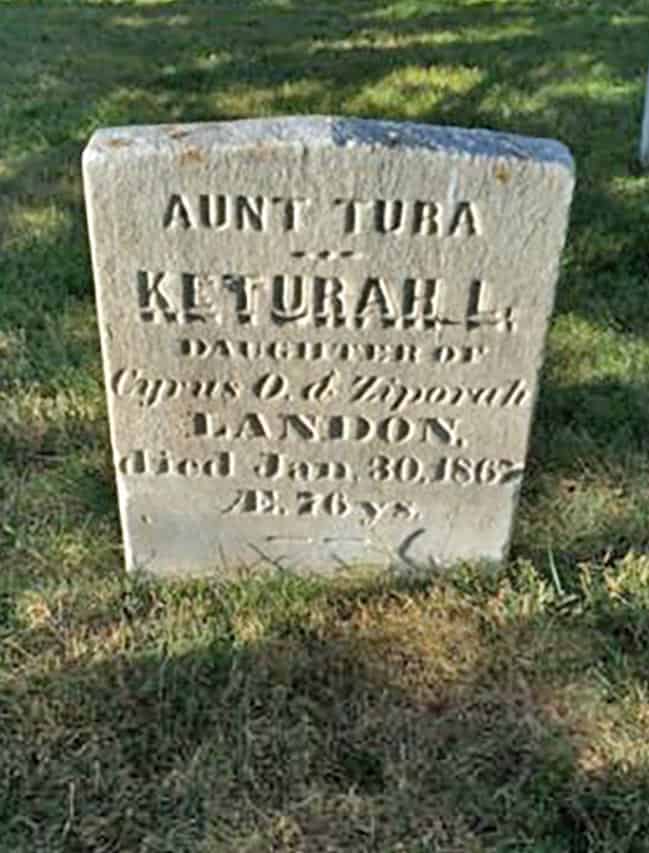
Keturah continued to work in the Landon household until her death on Jan. 30, 1867, at approximately 76 years old.
Compiling Keturah’s history gives us an interesting glimpse into the domestic life of a late 18th- and early 19th-century family and into the life of an enslaved domestic worker, later manumitted. A life that usually goes completely undocumented. Since local history was usually written by descendants of early settlers, slavery is rarely mentioned, and if it is, the writer usually goes out of his way to describe how well the enslaved were treated by their enslavers. While it could be argued that the Landon’s gave Keturah a decent life, it was not a life of her choosing. She was enslaved against her will, and even when given her freedom, her choices were so limited that her best choice was to stay in servitude to the Landon family.
-The Southold government’s website
-The Unsettling legacy of Waylan Jefferson, Jacqueline Dinan, 2024
–The Salmon records, a private register of marriages and deaths of the residents of the town of Southold, William Salmon,1915