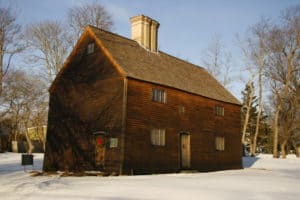




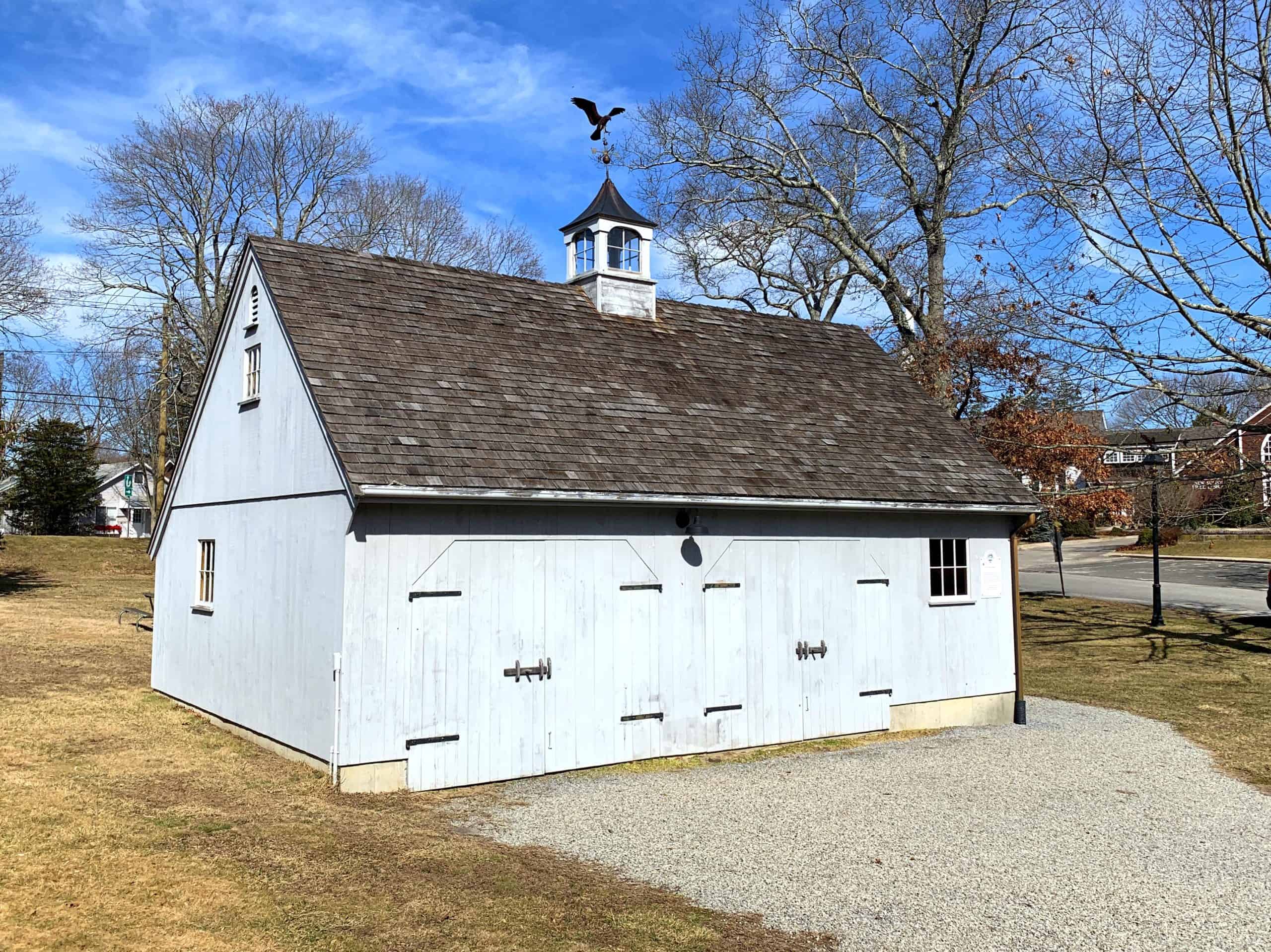



On May 27, The Cutchogue-New Suffolk Historical Council & Museums held its second annual Family History Day. The reenactors of the 3rd NY Regiment mustered their troops just north of the Old House on the Village Green. Between drills, the costumed soldiers relaxed in the Old House parlor, adding ambiance for touring guests. Later in the day, one of the reenactors approached me and said, “I am interested in historical musical books and manuscripts. I think you have a very old and rare one on the table in the old house.” I was somewhat familiar with it. It was being stored in the Bible box on the accounting table. Someone had removed it, and it was just lying on the table. Unfortunately, I didn’t get this person’s name, and he didn’t have a card.
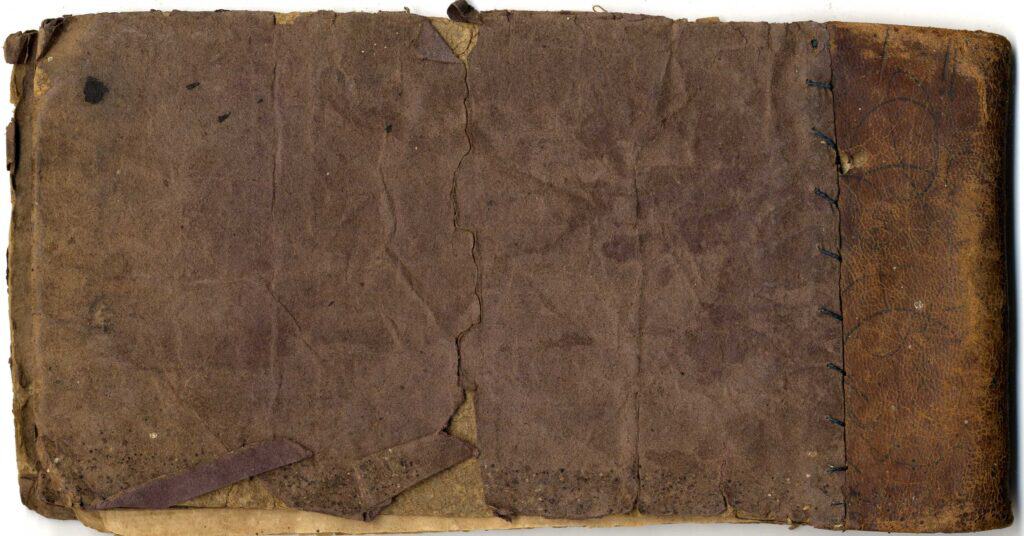
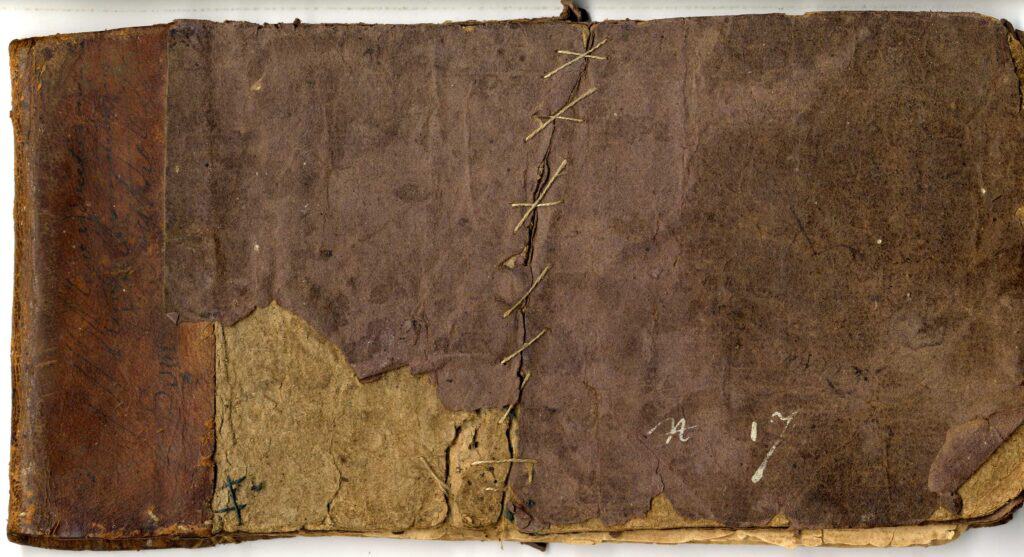
I then enlisted the help of Mariella Ostroski, the librarian in the history section of the Cutchogue Library. After scanning every page and sending me the files, she stored the manuscript in an acid-free box and placed it in a climate-controlled environment. And then we started to research.
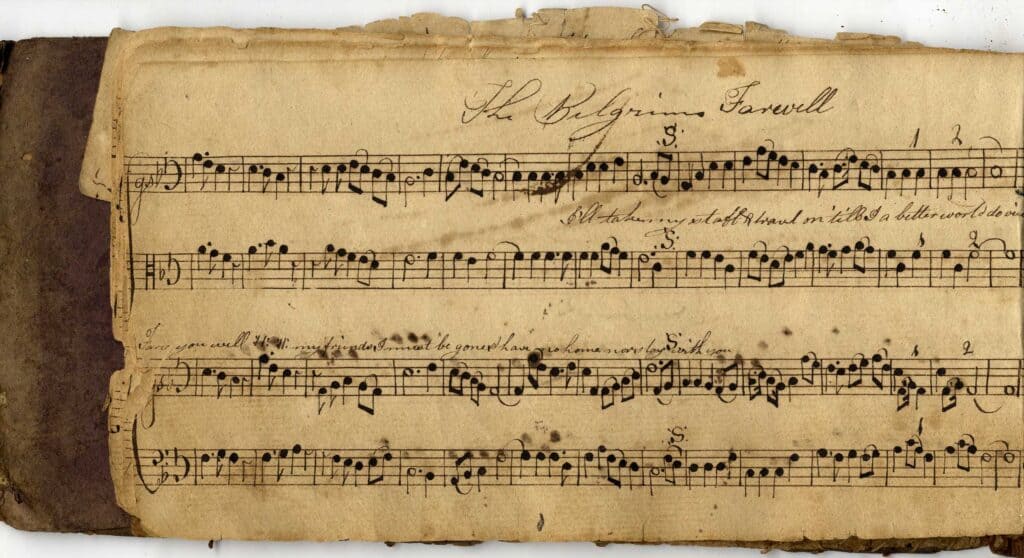
The manuscript can be best described as a bandsman’s music score handbound in a card-covered calf or buckskin wrapper, 8.5” wide by 4.5” tall. It contains some of the necessary rules of music as if the owner were trying to create a manual or just trying to remember some things for his personal use. The music staffs show the opening bars of over a dozen pieces, including “Scotland,” “Old Hundred,” “Judgement,” “Still Water,” “Messiah,” and “The Pilgrim’s Farewell,” the latter being the only complete piece in the manuscript and includes the words. The music was composed in 1793 by Jacob French, but this version is an expanded version published in Harmony of Harmony in 1802. The text and imagery in the book are meticulously hand-drawn, and the handwriting could be compared to engraving.
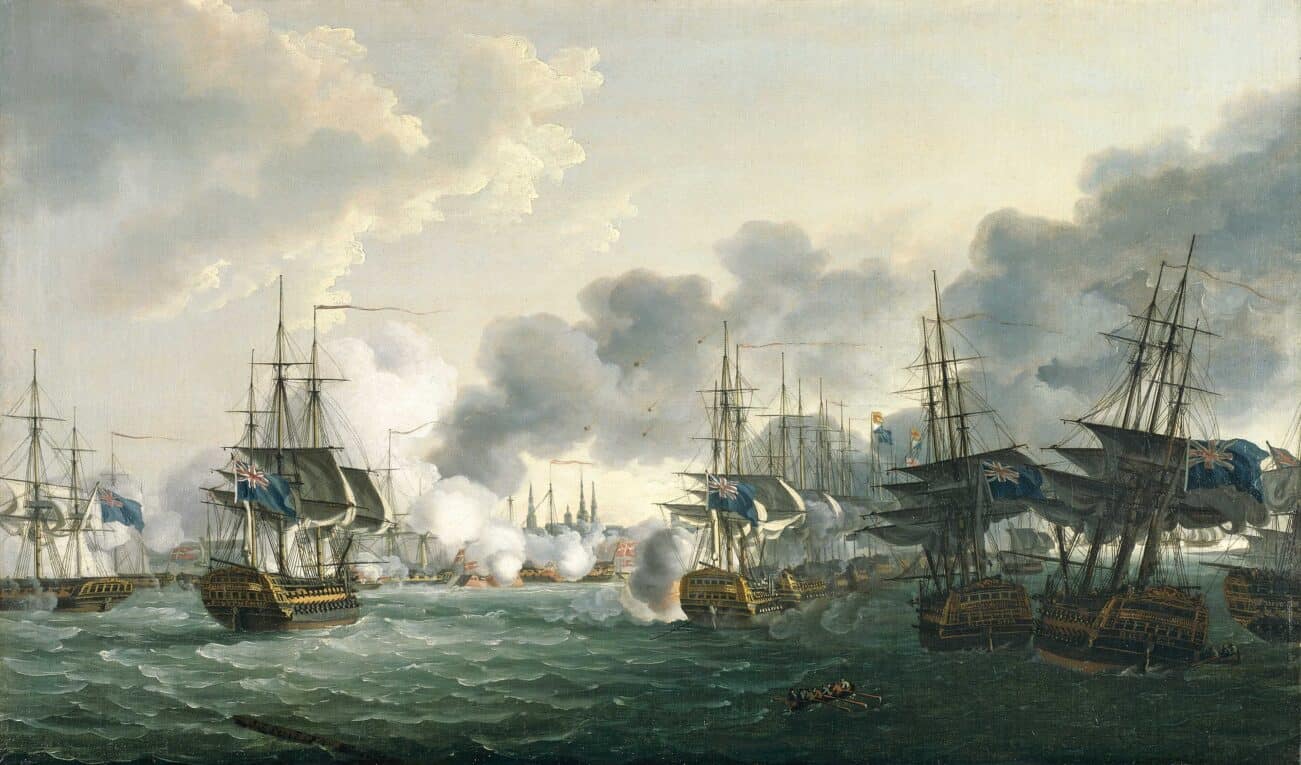
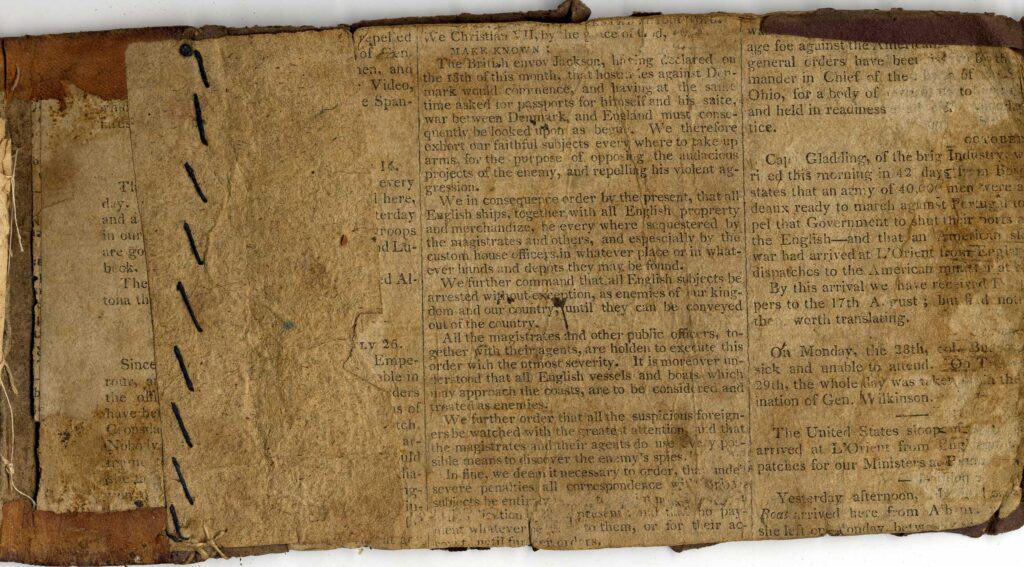
A few clues help us arrive at a date range for this booklet. One is that the interior of the front and back covers are lined with printed paper. It turns out that the paper is from the pages of the 1808 New Annual Register of History, Politics, and Literature, an annual founded in 1780 by Andrew Kippis in London, England. It recorded and analyzed the year’s significant events, developments, and trends worldwide. The most visible and conserved page describes the English Wars, a series of conflicts pitting the United Kingdom and Sweden against Denmark-Norway as part of the Napoleonic Wars at the beginning of its later stage in 1807.
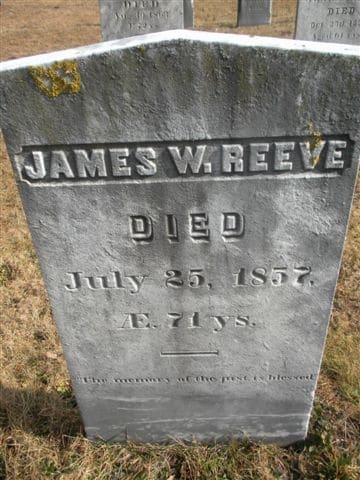
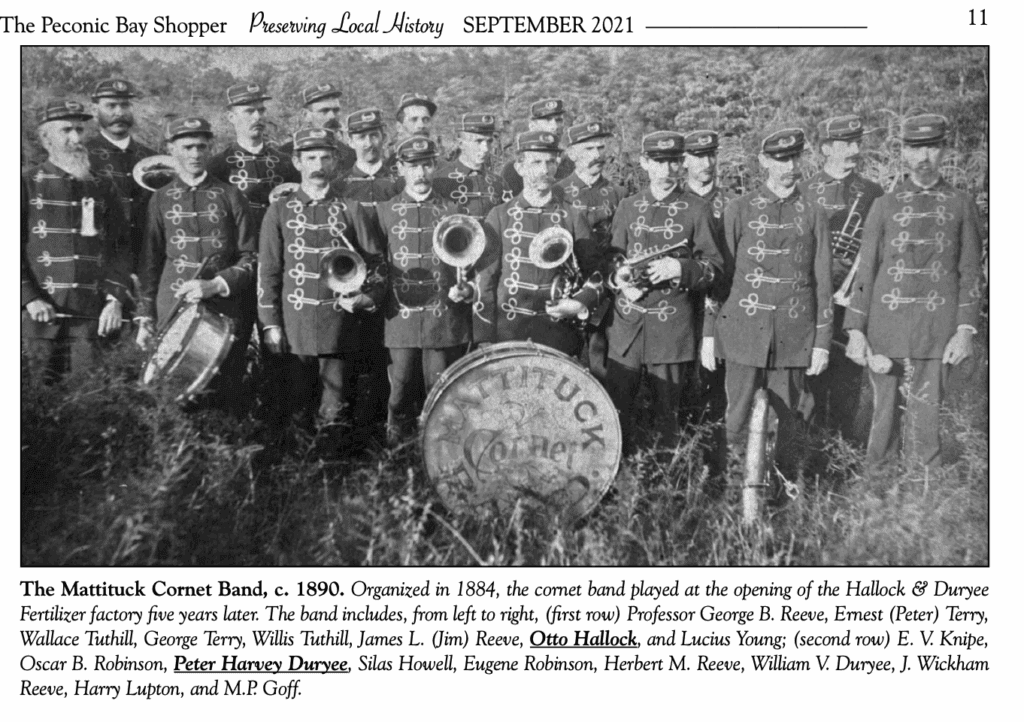
This puts the manuscript in the middle of the life of James W. Reeve of Mattituck, with his name and town inscribed on the front leaf of the manuscript. James W. (Wickham) Reeve married Phebe R. Goldsmith and was born in 1786, died in 1857 at 71 years, and is buried in the Old Bethany Cemetery. However, it could belong to his father, James Reeve, who married Parnel Wickham, who was born in 1756 and died in 1830. Interestingly, the Reeve’s line is known for producing many musically inclined people, including the Mattituck Presbyterian Church’s 1853 choir director, George B. Reeve. Under his leadership, the Church became renowned for its excellent music.
This is an great start to unraveling the mysteries of this manuscript. More research into what the two James Reeves were during their lifetimes could help us find additional information on this incredible musical manuscript that appears to be over 200 years old. A preliminary search of historical newspaper archives yielded few helpful results.
Update Sept. 17, 2025
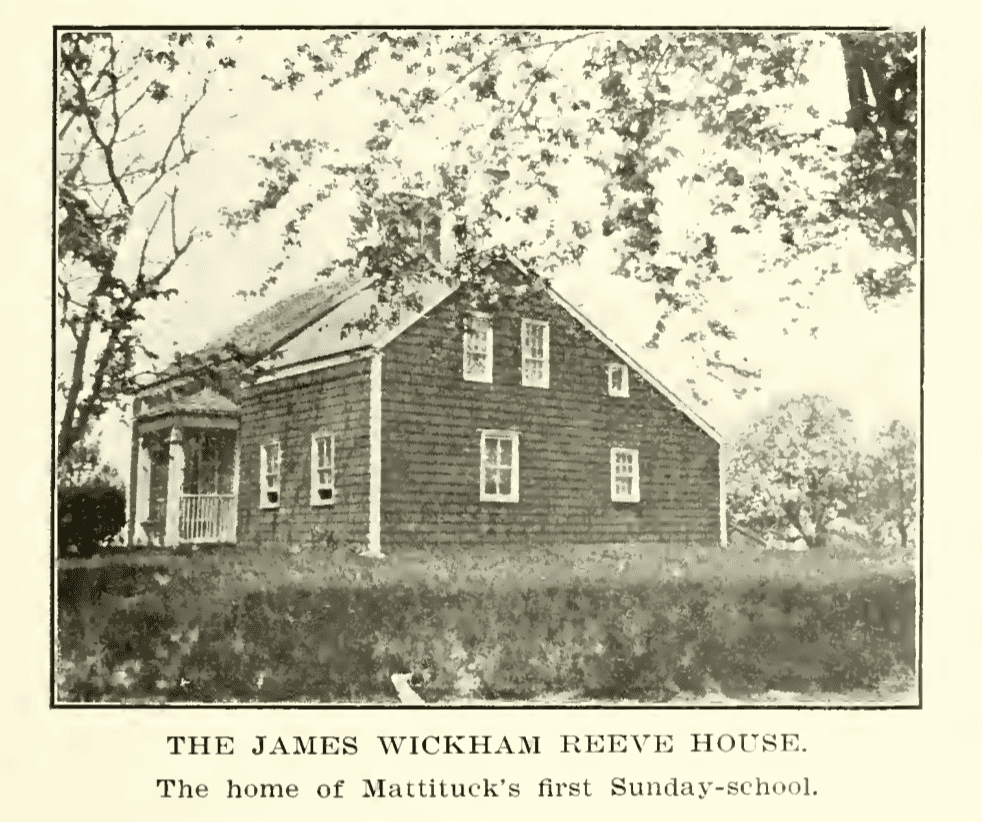
Some further research indicates that it is likely the manuscript owner is James Wickham Reeve, b. c1786, d.1857. Here is the lineage:
– James Reeves, Esq. b.1756,d.1830, m.(1) Parnal Wickham 1779, m(2) Mehetable Wells Downs,
-James Wickham Reeve, b. c1786 (son with Parnal) This is the likely manuscript owner, James Reeves, the dates fit .
– Edward Reeve, b. c1801 (Half-brother to J.W. Reeve) (son of Mehetable). This is George B.’s father, and he was the minister and elder at Mattituck Presbyterian.
– George B. Reeve (nephew of likely manuscript owner)
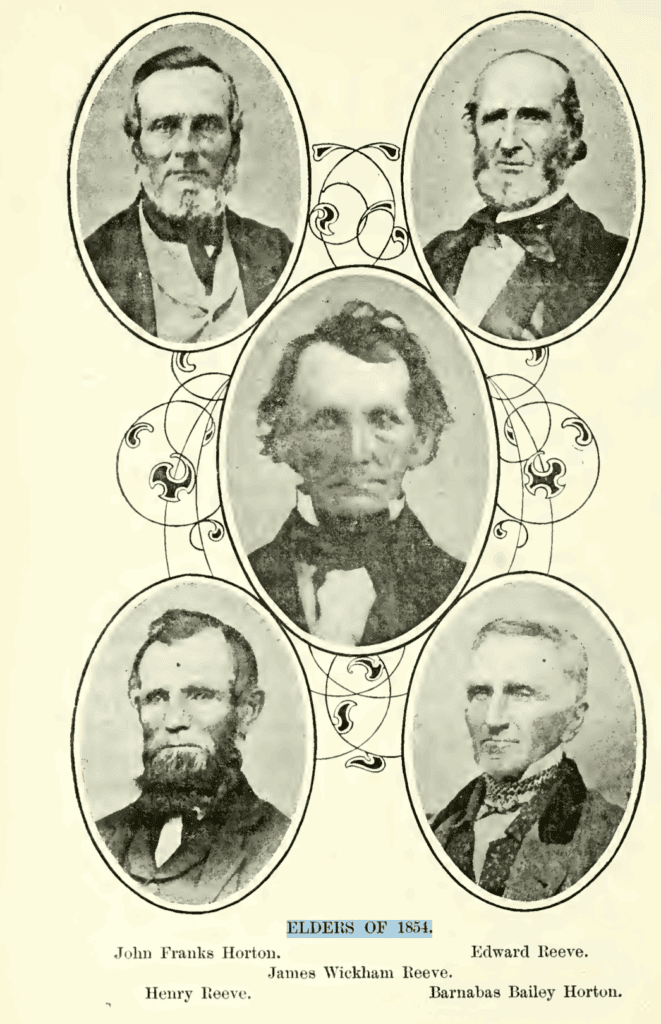
* From Craven’s history of Mattituck:
In the (Mattituck Presbyterian) church of 1853, before the extensions on the sides were added, the choir gallery, or platform, was in the north end of the audience room opposite to the pulpit. About that time, the present chorister, George B. Reeve, assumed charge of the music, and he has rendered eminent service ever since. For years Mattituck Church has been renowned for its excellent music. This has been largely due to the able, conscientious and indefatigable leadership of Mr. Reeve. His predecessor as chorister was Elder John Franks Horton, and before him the leader of the singing for many years was Deacon John Reeve, the great-uncle of the present chorister, George B. Reeve.
Obit for GEORGE B REEVE Mattituck- George B Reeve passed away at his home on Monday afternoon, age 86 years 1 month, 27 days. He was among the last of the veterans of the Civil War in this community. Mr Reeve has been a life-long resident in this village and well known in this section as a leader in music, having been a choirmaster of the Mattituck Presbyterian church for a number of years until his health failed. Funeral services were conducted in the Presbyterian church, of which he was a member, by Rev Mr Foote and Dr Craven on Thursday afternoon. The interment was in Bethany cemetery. He is survived by his widow, one son J Wickham Reeve and three daughters, Mrs Ruth Booth, Mrs O H Tuthill and Mrs William E Hallock.
Published in The County Review on Fri Dec 12, 1919 p10
As indicated this is ongoing research and if you have any errors to point out or any additional information that will add to the understanding of the owner of the manuscript or help us learn more information about his life, email: cutchoguehistory@gmail.com.