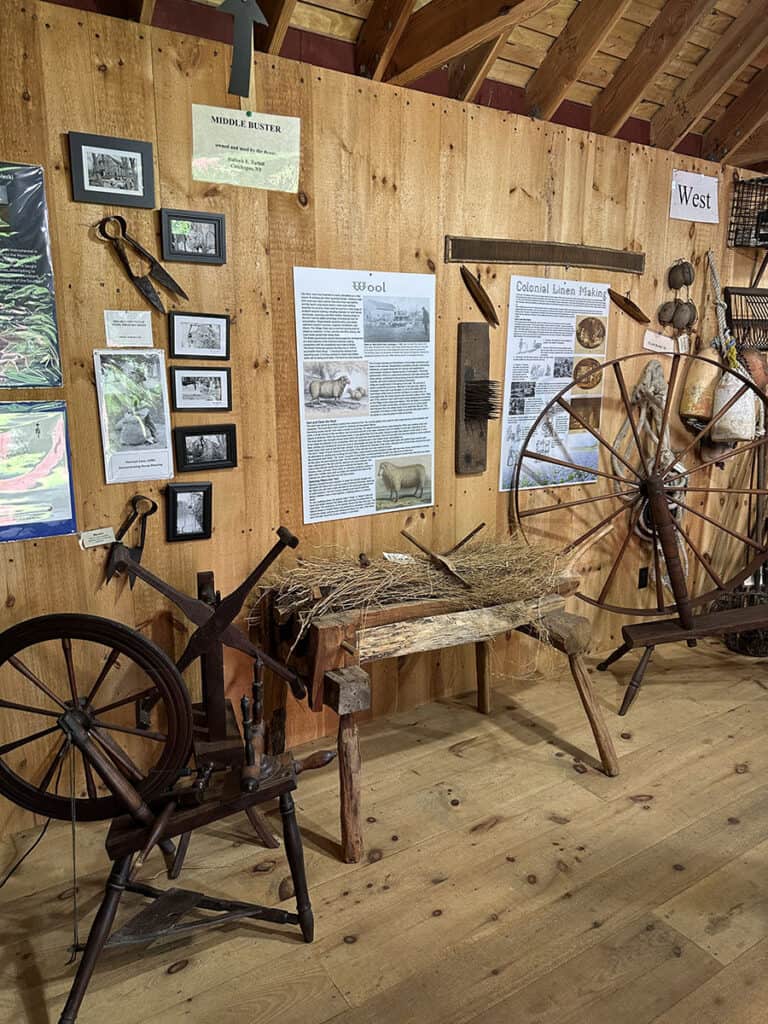



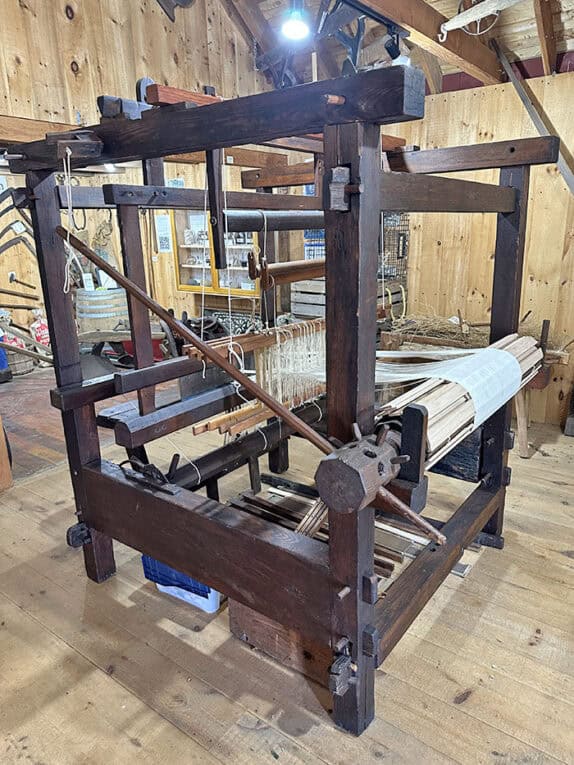
In February of this year, Kathryn Wojciechowski of the Old School Wool and Weaving Center in South Otselic, New York, visited our barn to see the weaving loom and tools in our collection. Although her specialty is 18th- and 19th-century tools, techniques, traditions, and textiles, her real passion is old looms. She has collected and returned to working order almost a dozen barn looms, and her particular focus is on using them as they were originally intended – for cloth production. Her purpose in examining the loom in our collection was to document its distinct features. Often, those particular features indicate what type of cloth or textile the loom was meant for, who may have used it, when, and where. Since there was very little documented provenance for our loom, her observations were made purely based on the 30 years of looking at looms in private collections, historic houses and museums, schools, for sale ads and her own looms as well as sharing information with others who have knowledge and experience with old looms both in the U.S and Europe.
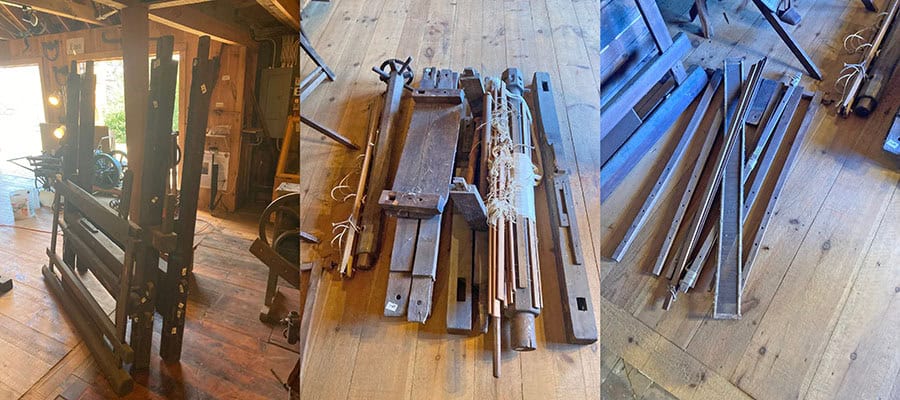
Our loom was donated by Pat and Bill Milford of Southold, who purchased it from a couple in New York City in the 1980’s. Being avid weavers, they had their own looms and put the unassembled loom up on the second floor of the barn. The people they purchased it from claimed it originated in the highlands of West Virginia. The loom was assembled and restored in the winter of 2025 by Gunther Maertz, Bettyann Maertz, Maryanne Raleigh, and Benjamin Raleigh, in consultation with Kate Smith, formerly the director of Marshfield School of Weaving and currently the founder/ owner of Weaver’s Croft. and an expert in historic equipment and the weaving of traditional textiles.
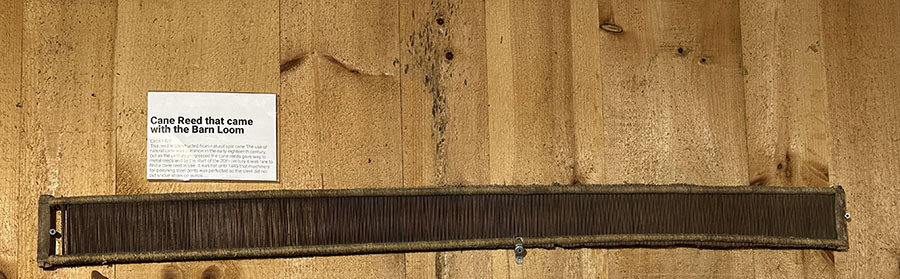
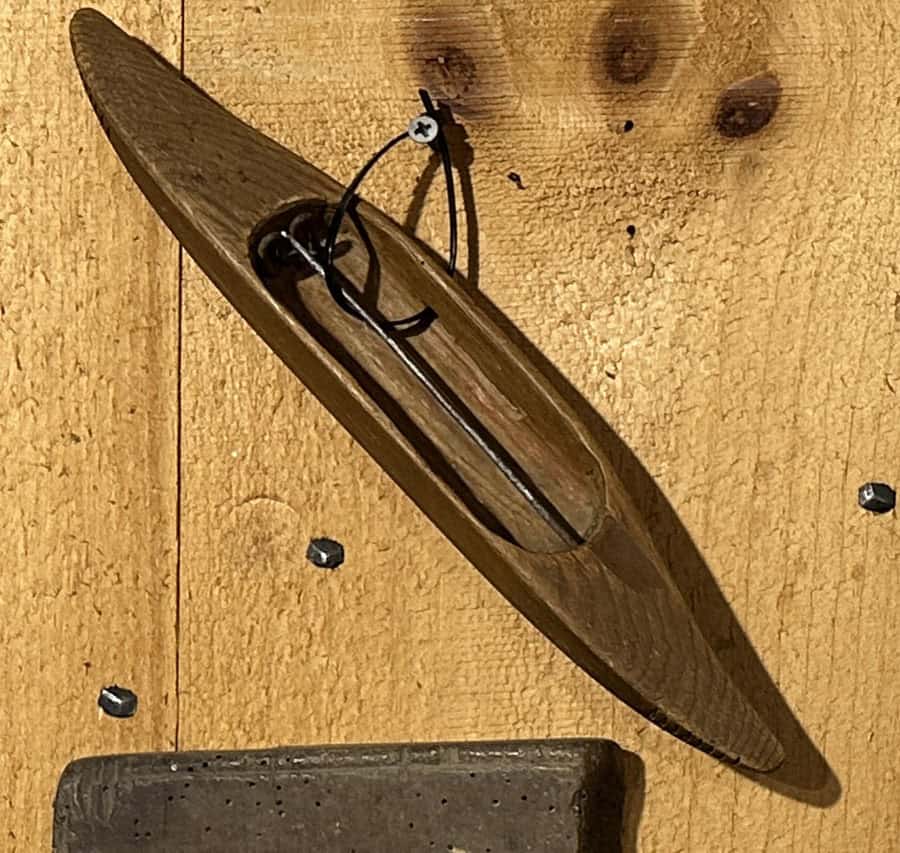
The loom came with a cane reed. This reed is constructed from natural split cane. The use of natural cane was common in the early eighteenth century, but as the century progressed, cane reeds gave way to metal reeds, and by the start of the 20th century, cane reeds were rare. It was not until 1845 that machinery for polishing steel dents was perfected, so the steel did not put undue strain on warps. It also came with a Boat Weaving Shuttle. The primary function of a shuttle is to carry the weft yarn through the shed, allowing the weaver to create the fabric.
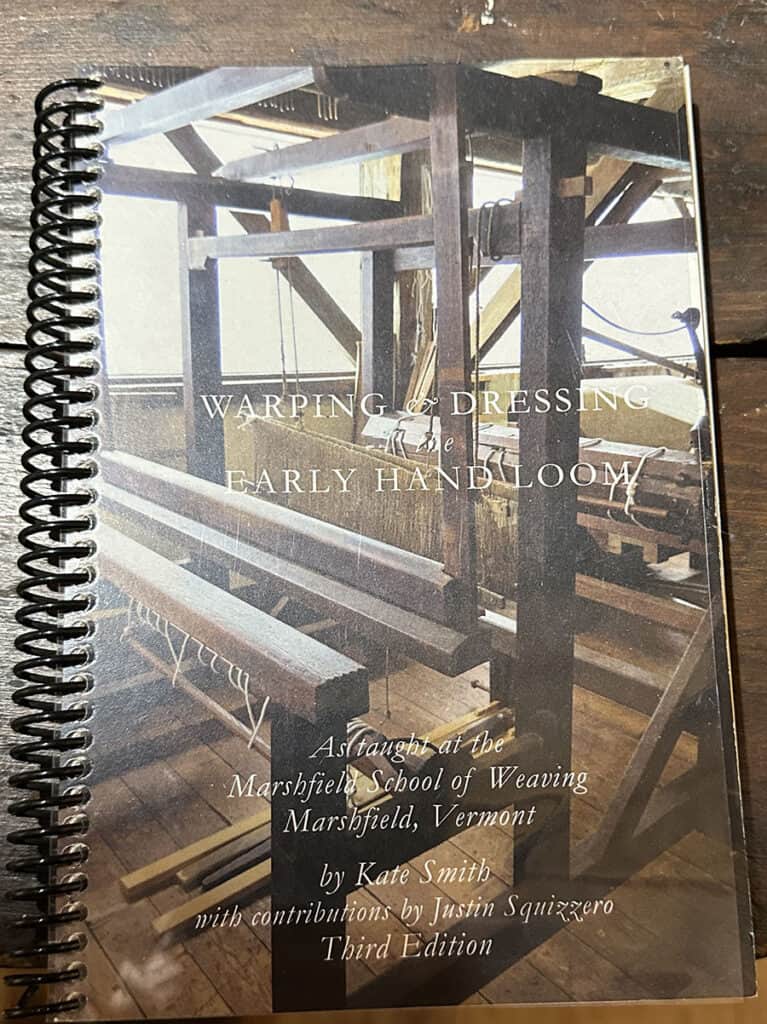
Although we thought the loom dates to the early 19th century, Kathryn felt that it dates to the early 18th century, confirming the fact that it is a colonial era loom.
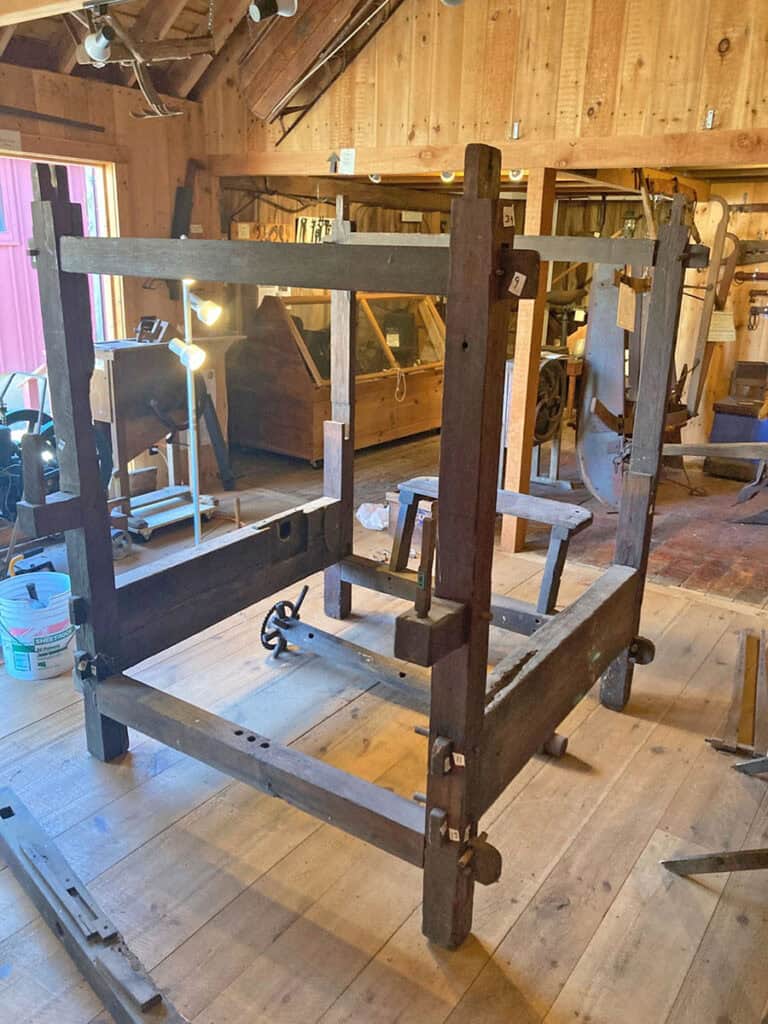
Here are some of Kathryn’s comments after inspecting the loom:
The loom has very tall side pieces, with tenons that extend through the upright supports and are held together with wedges on the outside of the frame. These two features indicate to me that the loom has some German, possibly Dutch influence. Often, settlers from these countries crafted barns and looms in the style of their homeland, and this may be the case with this loom.
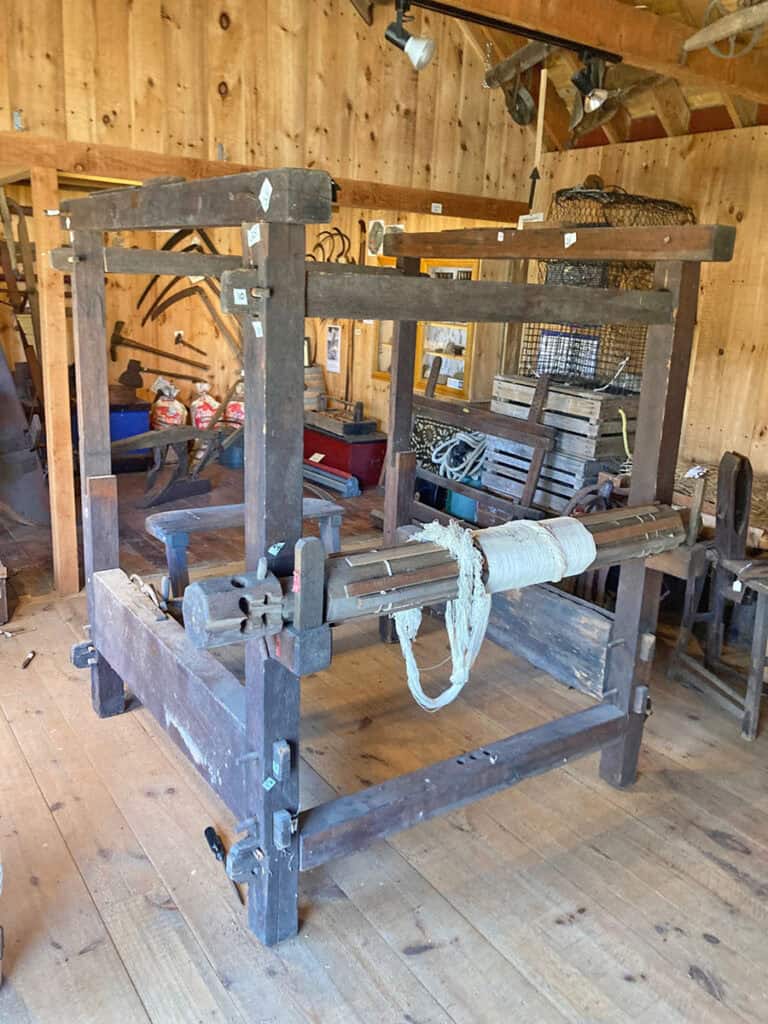
The term “barn loom” is inaccurate, as these looms have little, if anything, to do with barns. In the day when they were made, they were simply referred to as “looms”. It is in this modern age that we have chosen to distinguish these 18th- and 19th-century looms as “barn looms”. The only connection to barns is the mortise and tenon joinery with which the loom is constructed and held together.
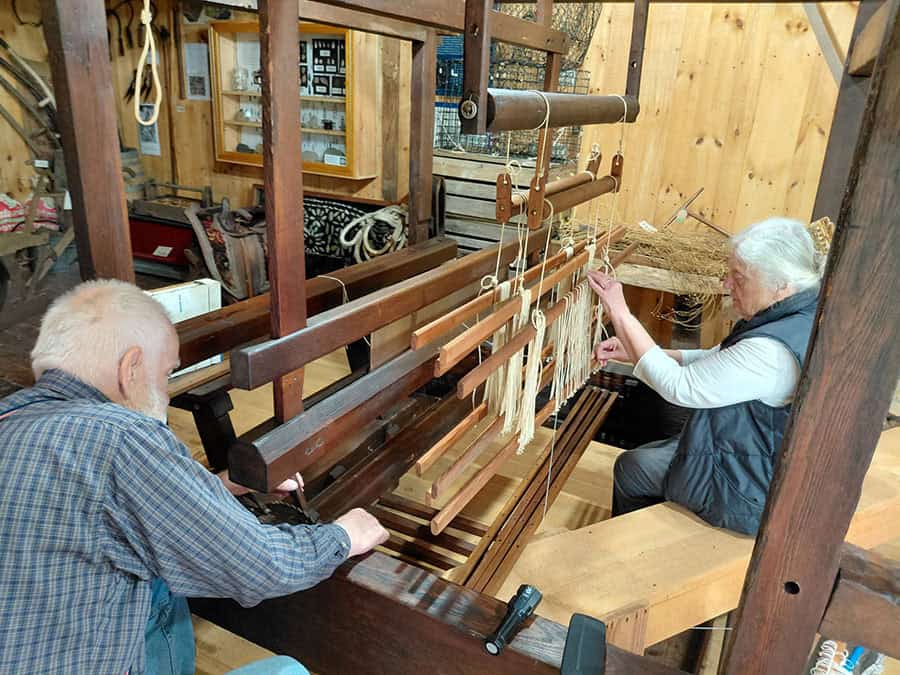
The footprint, or width and length, of this loom is common. Though the size of various looms can vary depending on what their intended purpose was, the standard size for home textile production was a frame of 5 feet x 5 feet. This loom was roughly 55 inches wide by 55 inches long. Its height is also typical – just about 6 feet tall.
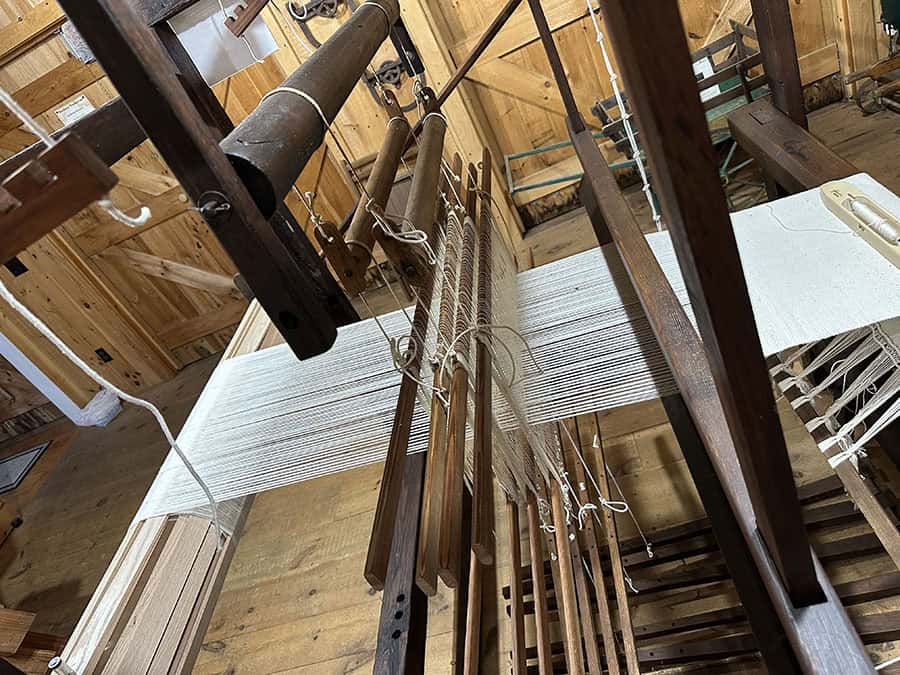
This loom was constructed in the “four-post, bore staff” style, meaning the frame almost resembles a four-post bed.
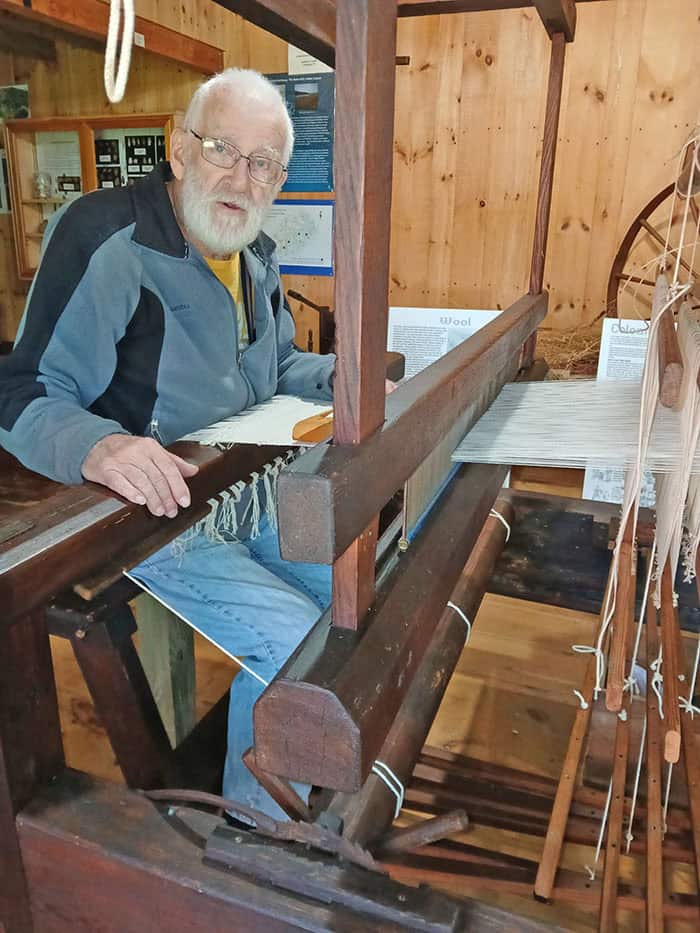
The warp beam is advanced by the weaver from the bench or seat, by a long post inserted into the right-hand side of the warp beam. Hence the term “bore staff loom.”
Some repairs were expertly done by a skilled and meticulous craftsman with knowledge of old barn looms. These repairs will certainly help extend the useful life of the loom.
There is some damage as well, battle scars of sorts. Some timbers split as the wood dried, and other areas may have been damaged in accidents.
The split timbers can be supported and strengthened, allowing the use of the loom until it is possible to completely replace the mortise-and-tenon timber with a new piece made in the same way.
Two modifications are also notable. One is the addition of supports to the underside of the weaver’s bench, and the other is the addition of multiple treadles to the front of the loom. The original treadle system appears to have been attached at the back of the loom and was for four treadles. The modified treadles system at the front of the loom would allow, with the addition of a corresponding number of shafts, for more diverse patterns.
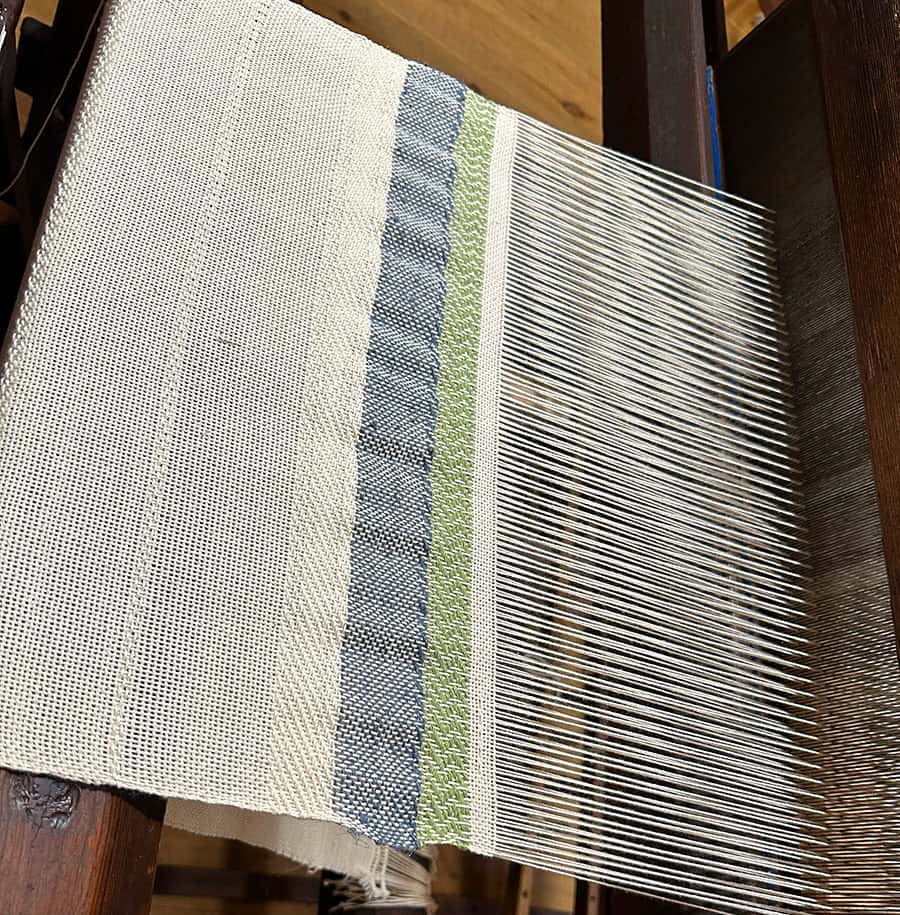
At the top right-hand side of the loom (facing front-to-back), the cross piece appears to have been charred in some way. The wood is also split, but still capable of supporting the beater for weaving. However, at the earliest convenience, having a new beam made by the original method would be beneficial.
Overall, my conclusion is that the loom was made by someone with knowledge of Dutch or German construction style and very likely from an area settled by German/Dutch immigrants to the New World.
I have little doubt that the loom would have been used to weave cloth yardage for garments as a priority, as well as bedding and other household textiles.
These old looms can weave the finest threads for light and loose fabric to the heaviest cordage for feed bags and rugs.
While many of the old looms found today wove rag rugs in the last years of their useful life, it was only as a means to continue to use the loom. Rag rugs were popular in rural areas, especially at the end of the 1800s and into the 1950s or so. Rag rugs provided a way to use readily available resources to craft a useful household item. These 18th and 19th-century looms were built to furnish families, if not entire communities, with the means to have cloth during a time when supplies had been cut off from England. With a need for such cloth and a spirit of independence, women clothed an entire nation, one family at a time.